

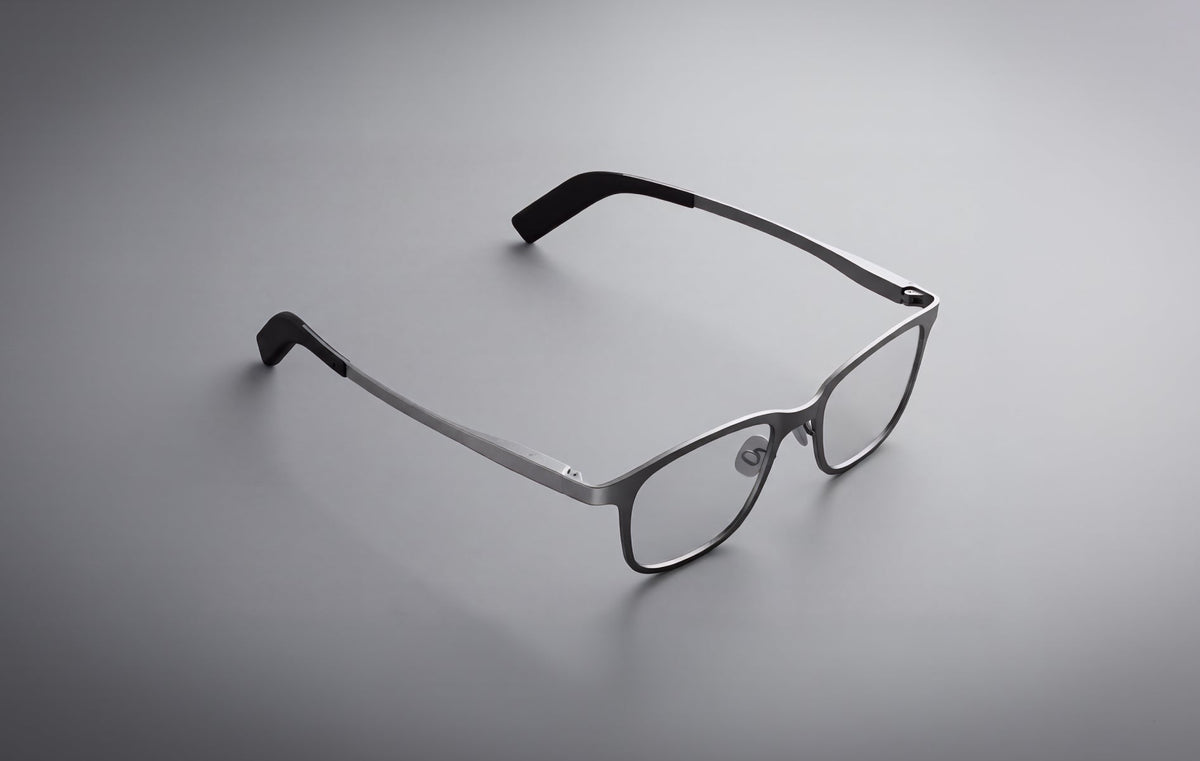
Some of the information we most want to remember comes from ordinary moments—a decision made in a meeting, something mentioned in conversation, or an idea that becomes important only days later. Memory Glasses are designed to help keep that context available, so you can return to it when you need it. This focus on what remains useful after the moment is what sets the category apart from many existing smart glasses.
Memory Glasses vs. AI Glasses
Smart glasses have traditionally brought functions such as cameras, audio, navigation, and displays into eyewear, while newer AI glasses add real-time assistance. Memory Glasses take the same wearable form in another direction, focusing on information that may become useful after the moment has passed.
You might use an AI assistant to understand what is in front of you. With a memory system, the need often comes later: What did Daniel tell me about this last week?
These categories can share similar hardware and AI technologies, so the difference is not defined by a particular sensor or model. What matters more is what the product is primarily built to help you do. For Memory Glasses, that means keeping useful context available so you can return to it later.
Why not just use a phone?
Phones already contain excellent note-taking and recording tools. The problem is not a lack of places to save information. The problem is friction.
You have to recognize that something matters, take out the phone, open an app and deliberately capture it. That works when you already know what will be important. But everyday life is less predictable.
A useful idea might appear halfway through a conversation. A meeting may move too quickly to write down every decision. Someone may casually mention something you only realize you need weeks later. Memory Glasses move the point of capture closer to the experience itself.
Capturing is not the same as remembering
A recorder preserves information. A memory system tries to make that information useful again. Imagine having an hour-long recording of a meeting. Technically, nothing has been lost—but you may still need to find the file, search through it and reconstruct the context yourself.
Memory begins where storage ends.
You may remember a person but not the date. A topic but not the sentence. Or simply: We talked about this before. A useful memory system needs to work with those incomplete clues.
How Sutyo Cue approaches Memory Glasses
Sutyo Cue is designed around a simple flow:
stay present → capture with less friction → return to the moment later.
Cue brings spoken interactions into a wearable form, while Sutyo AI helps organize and retrieve the resulting personal context. Together, the experience moves beyond preserving information toward recall. This is also why we think eyewear is a natural form for wearable memory.
The device can remain close to everyday life without constantly occupying your hands or attention. Memory Glasses are not about putting more technology in front of your eyes. They are about making it easier to return to something that mattered.

Share:
Introducing Sutyo Cue: Glasses That Remember
Meet Sutyo AI: A Memory You Can Talk To